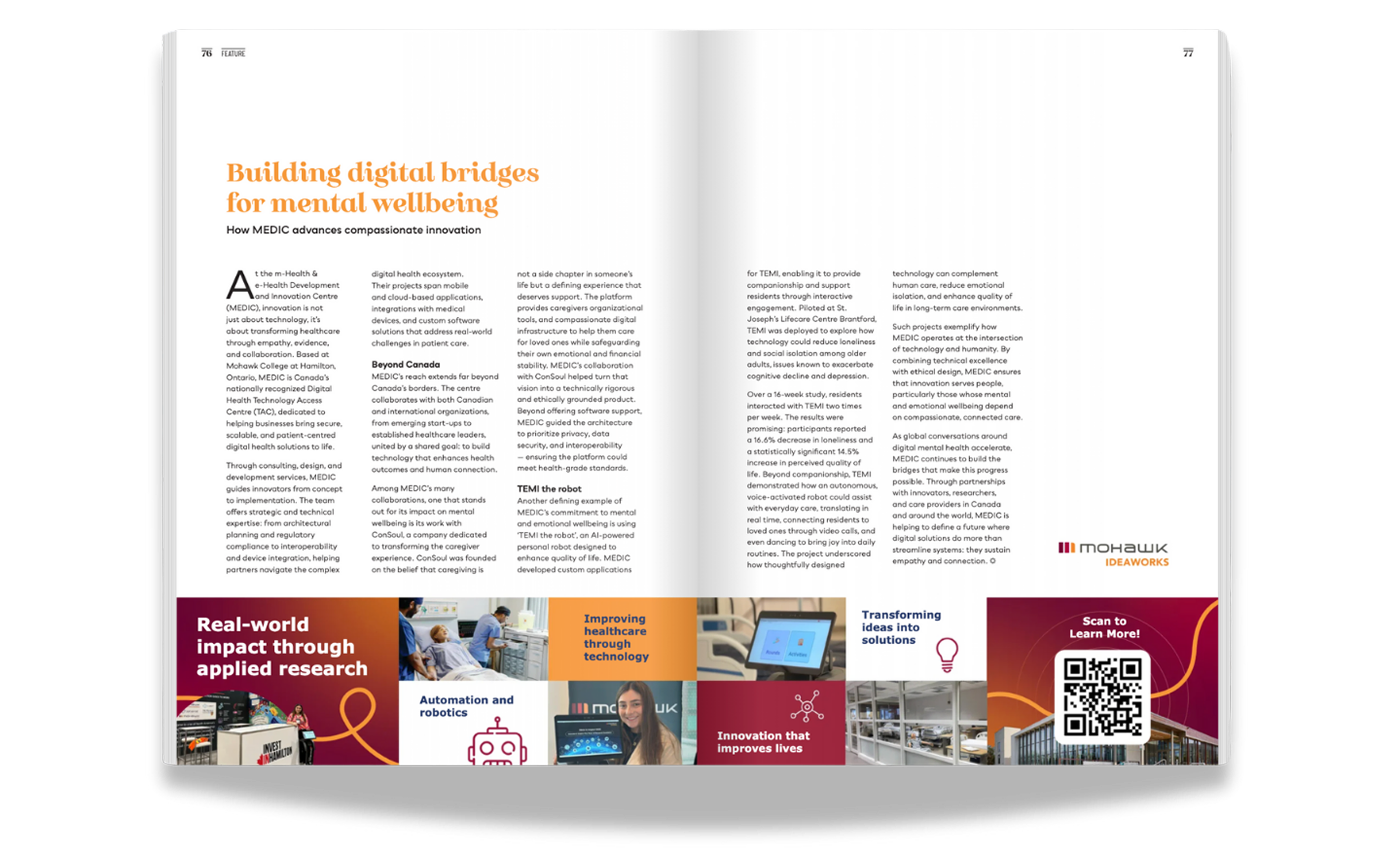
One of my favorite projects was working on
TEMI,
an autonomous AI assistant robot designed to
follow users,
navigate spaces independently, and help people connect with family, friends, and online services.
At
St. Joseph's Lifecare Centre Brantford, TEMI was piloted in a
six-month HiREB-approved clinical study in 2023-2024 to help reduce
feelings of loneliness among residents.
I worked closely with programmers from the
MEDIC team to design the
UX and product flows for TEMI. This project really pushed me to think differently about design. Our main users were
elderly residents and
patients, so
every interaction had to be
simple, clear, and accessible. Through
continuous testing, I learned how important
accessibility features are, from
readable interfaces to
reducing cognitive load and
making navigation intuitive.
Putting myself in the users' position helped me better understand
their emotional needs. Many residents simply wanted
someone to talk to, especially in
their own language. That insight led us to include
AI-powered translation features to support
multilingual communication and make conversations feel more
natural and inclusive.
This project deeply touched me. Seeing residents
feel joyful and
connected reminded me that
design isn't just about functionality, it can truly impact someone's emotional well-being. It strengthened not only my UX and collaboration skills, but also my empathy as a designer.
Find out more about TEMI and the
MEDIC team here.